How Does DHA Microencapsulation Improve Stability?
When it comes to nutrition, DHA is one of the best omega-3 fatty acids on the market. If you don't protect it properly, it oxidises quickly, gets bad tastes, and loses its effectiveness before it even gets to the customer. This problem can be fixed by using microencapsulated DHA algal oil powder. This protects the oil from oxygen, moisture, and heat by encasing it in a matrix made of modified starch or plant protein. The end product is a powder that doesn't stick together and has a peroxide value of less than 2.5 mmol/kg. It also has a surface oil value of less than 1% and can last up to 150% longer than regular liquid DHA oils.
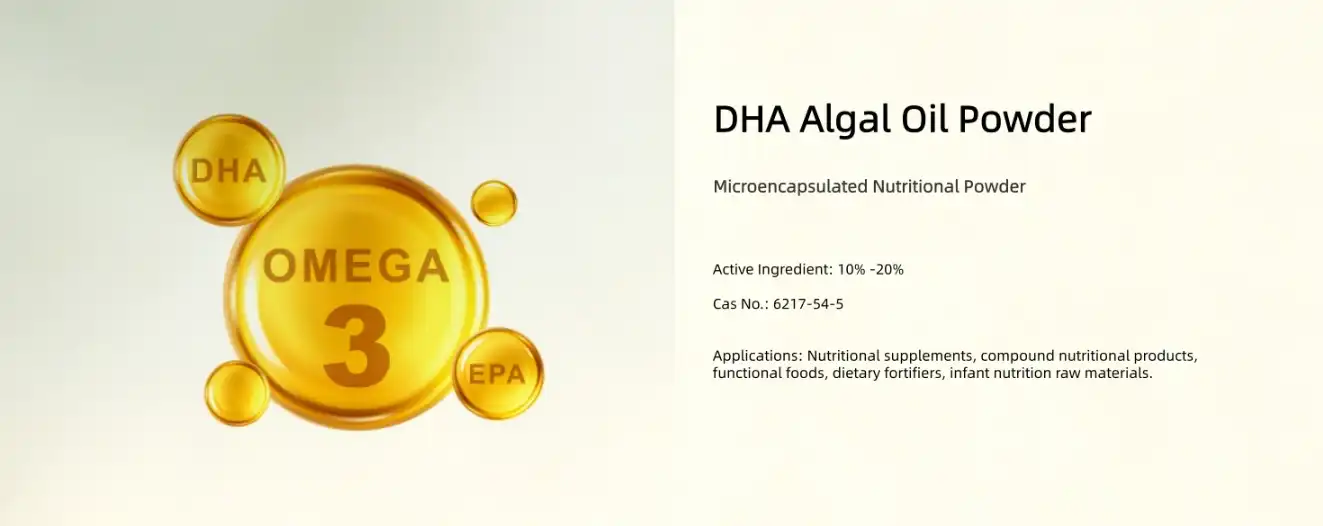
Understanding the Stability Challenges of DHA Algal Oil Powder
EFAs, or long-chain polyunsaturated fatty acids, are what DHA is. It is chemically reactive and easy to oxidise because it has a lot of double bonds. This is an issue that affects almost all uses after it, from baby formula to food supplements.
Oxidation Is the Primary Threat
The double links that hold DHA oil together are broken when air, light, or heat touch it. These changes destroy bioactive materials, make tastes bad, and raise the amount of peroxide in the air. If DHA oils from fish or algae are not kept safe, they can reach dangerous levels of peroxide in just a few weeks at room temperature, according to studies.
Moisture and Temperature Accelerate Degradation
People who don't cover their DHA particles can get water from the air, even when they're powder. Most things break down faster when there is a lot of humidity. When goods are shipped across countries, changes in temperature make these problems worse by making things cake, clump, and go bad faster.
Sensory Failure Kills Consumer Products
Food for babies or kids that smells like fish is a big problem that means the end of the queue. People never buy things that smell like algae or fish. When the procurement team buys DHA for sensitive groups, they need to make sure that sensory performance is the main goal, not just a secondary one.
How Microencapsulation Enhances DHA Algal Oil Powder Stability?
By putting a wall around each oil droplet, microencapsulation turns liquid DHA oil into a solid, dry powder. Formulators who have to deal with LCPUFA instability can use this physical barrier more effectively than any other tool they have.
The Core-Shell Structure Creates a Protective Barrier
In this method, DHA oil from Schizochytrium sp. microalgae is mixed with wall materials like modified starch or glucose syrup to produce microencapsulated dha algal oil powder. The mixture is then atomised and put into a hot-air chamber. Around the oil core, each droplet makes a rigid shell. The level of surface oil (oil that's on the outside of the shell) is kept at ≤1.0%, which is directly related to how well it resists oxidation and how clean it feels to the touch.
Shelf Life Extends by Up to 150%
The barrier around the encapsulation keeps oxygen from getting to the DHA core. Manufacturers of encapsulated DHA powder have shown that when stored at 25°C in sealed containers, the peroxide level stays well below 2.5 mmol/kg for 18 to 24 months. This is a 150% longer shelf life than liquid DHA oils that aren't protected, which can go bad in the same settings in 3 to 6 months.
Zero Fishiness Passes Blind Sensory Testing
The wall material holds on to the volatile compounds that cause fishy and algae smells. At most, our Easy Health product has a light DHA oil smell, and sensory blind tests show that ≥90% of trained groups were able to pass. This level of performance is the difference between a brand's products being accepted and being recalled by pregnant women, babies, and kids.
Selecting the Right Microencapsulated DHA Algal Oil Powder for Your Supply Chain
There are different grades of microencapsulated DHA algal oil powder available for food and nutritional applications. Purchasing teams need to evaluate technical specifications and commercial factors before approving a supplier.
The most important things that make high-performance packed DHA tablets different from cheaper ones are the following:
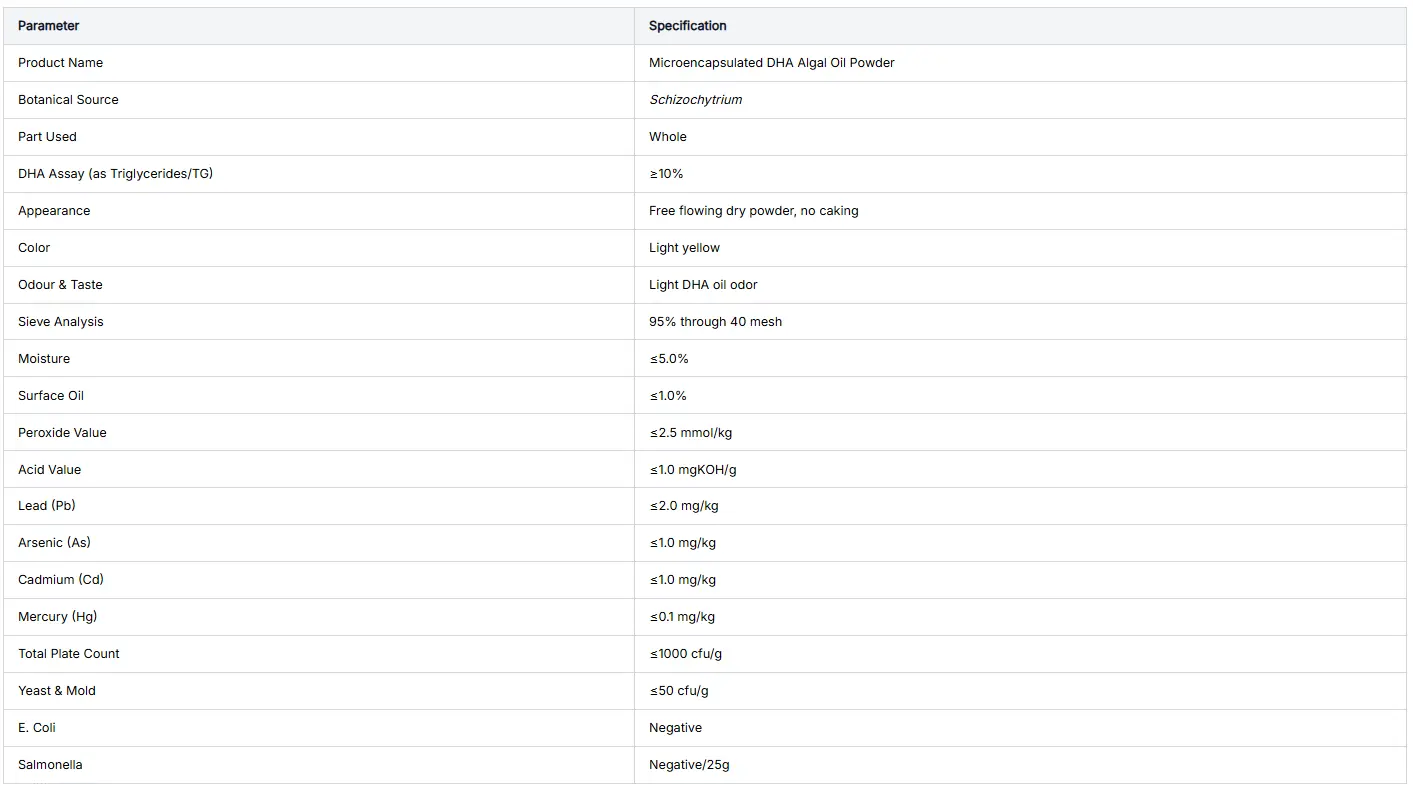
- DHA assay (as TG) ≥10% with batch-to-batch variation ≤±1%: Tight specification control is mandatory for infant formula registration and label compliance. Inconsistent potency creates regulatory exposure.
- Surface oil ≤1.0%: This is the clearest indicator of encapsulation efficiency. High surface oil means poor shell formation, faster oxidation, and off-flavor risk.
- Peroxide value ≤2.5 mmol/kg and acid value ≤1.0 mgKOH/g: Both metrics confirm the oil has not undergone significant oxidative or hydrolytic degradation at the time of delivery.
- Heavy metals below infant-grade thresholds: Lead ≤2.0 mg/kg, Arsenic ≤1.0 mg/kg, Cadmium ≤1.0 mg/kg, Mercury ≤0.1 mg/kg — all aligned with FDA and Codex Alimentarius infant food standards.
- Salmonella negative/25g and E. coli negative: Non-negotiable for any food-grade application, particularly in infant nutrition.
These rules will help you figure out if a DHA powder will work well in your production line and while your product is on the market. Suppliers of baby formula or registered formulation who can't show batch COA paperwork should be taken out of the supply chains.
Real-World Applications Where Encapsulated DHA Powder Delivers Results
When procurement teams know where this ingredient works best, they can better match product specs to application needs.
Infant Formula and Early Childhood Nutrition
This application is the hardest to get through. For dry-blending to work, the powder needs to be solid when mixed at high speeds, not oxidise while being packed, and completely dissolve in cold water in 30 seconds without leaving an oil film. These performance standards are met by our algal DHA powder, which also has the traceability paperwork needed for formula registration.
Dietary Supplements — Capsules, Tablets, and Gummies
The microcapsule shell keeps DHA oil from leaking when the capsule is compressed and keeps it from reacting with minerals like iron or zinc in goods that are made with other minerals. OEMs that make vegan DHA softgels or gummies can use algal-sourced powder because it is 100% plant-based and free of allergens. Fish oil just can't compare to this clean-label benefit.
Functional Foods, Beverages, and Pet Nutrition
DHA powder can be added to functional drinks, cereal bars, and protein shakes that have been fortified without changing the taste or texture. Algal DHA helps brain and eye development in high-end pet food, especially high-end cat and dog formulas. It meets the same purity standards for human nutrition. The powder can be mixed directly into kibble or wet food because it is free to flow.
Future Outlook: Where DHA Powder Technology Is Heading
It's getting easier to figure out how to make walls. Brand-new encapsulation methods that use Arabic gum blends or pea protein isolates work better in acidic drinks and keep oxygen out better. Thus, DHA can be added to a wider range of healthy foods.
It's also getting worse with the politicians' heat. The U.S. Food and Drug Administration (FDA), the Novel Food Commission of the European Union, and China's SAMR are all making stricter rules about how much bacteria and heavy metals can be in foods that are safe for babies. From tomorrow on, formula registration approvals will only go to providers who spent money on analysis tools and keeping track of batches. Teams that buy things and have built ties with big, trusted suppliers can now handle these rule changes better without having to stop getting things.
Conclusion
DHA microencapsulation solves a genuine formulation problem: it turns a chemically fragile oil into a shelf-stable, odor-free, easy-to-handle microencapsulated dha algal oil powder that works across infant formula, supplements, functional foods, and pet nutrition. The technology is well-established, the quality benchmarks are measurable, and the procurement criteria are clear. If your supply chain requires a DHA ingredient that delivers consistent potency, passes sensory evaluation, and meets infant-grade safety standards, encapsulated algal DHA powder is the right starting point for your sourcing conversations.
FAQ
What makes algal DHA powder better than fish oil powder for B2B applications?
Algal DHA is 100% vegan, derived from Schizochytrium sp. microalgae, and contains no marine contaminants such as PCBs or dioxins. Fish oil carries the risk of environmental pollutant carryover. For brands targeting clean-label, vegan, or infant-safe positioning, algal sourcing removes that compliance risk entirely.
What is the standard shelf life of encapsulated DHA powder?
Stored in sealed packaging below 25°C in a dry environment, properly encapsulated DHA powder maintains specification compliance for 18 to 24 months.
Does encapsulation reduce DHA absorption?
No. Wall materials such as modified starch and glucose syrup break down readily under digestive enzyme activity in the small intestine. Bioavailability studies confirm DHA absorption is equivalent to that of liquid oil.
Can this powder withstand high-temperature food processing?
Yes. Specialized encapsulation grades are engineered to tolerate UHT temperatures and extrusion processes, making them suitable for baked goods and extruded snack fortification.
What certifications should I require from a DHA powder supplier?
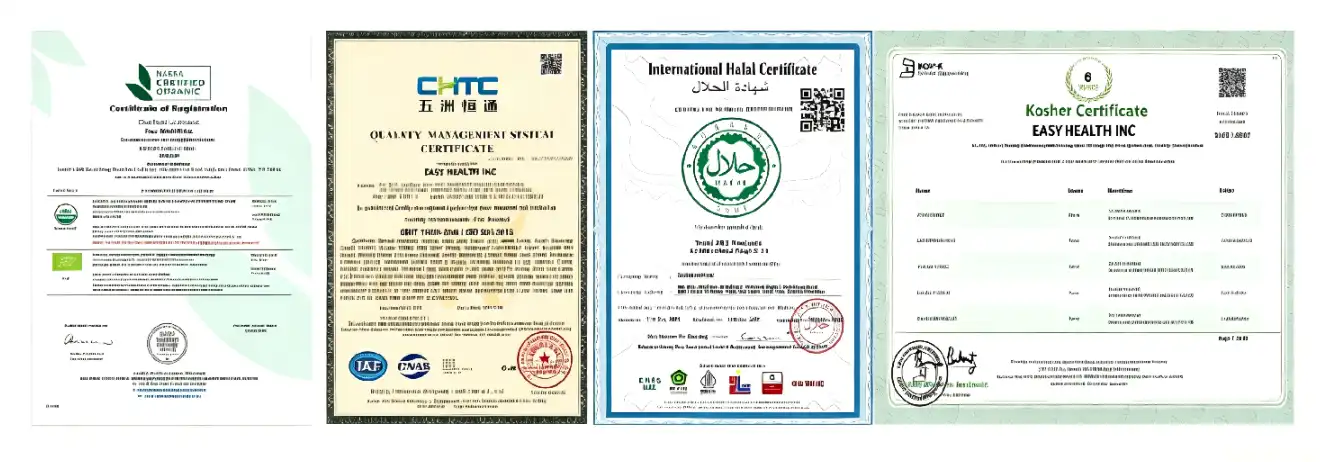
At minimum: GMP, HACCP, ISO 22000, and the ability to provide batch-specific COA and MSDS documentation. Organic (USDA NOP or EU Organic) and Non-GMO certifications are additional advantages for premium market positioning.
Partner with Easy Health for Certified Microencapsulated DHA Algal Oil Powder
Algal DHA is made from microalgae Schizochytrium sp. and is cruelty-free. Neither PCBs nor dioxins, which are bad for the environment, are in microencapsulated dha algal oil powder either. The ground might become dirty if fish oil is used. Algal sourcing takes away the risk of not following the rules for brands that want to be known for having clean labels, being vegan, or being safe for kids. For more information, contact devin@easyhealthbio.com or visit easyhealthinc.com.
References
1. Burdge, G. C., & Calder, P. C. (2005). Conversion of alpha-linolenic acid to longer-chain polyunsaturated fatty acids in human adults. Reproduction, Nutrition, Development, 45(5), 581–597.
2. Favé, G., Coste, T. C., & Armand, M. (2004). Physicochemical properties of lipids: New strategies to manage fatty acid bioavailability. Cellular and Molecular Biology, 50(7), 815–831.
3. Kolanowski, W., Laufenberg, G., & Kunz, B. (2004). Fish oil stabilisation by microencapsulation with modified cellulose. International Journal of Food Sciences and Nutrition, 55(4), 333–343.
4. Shahidi, F., & Ambigaipalan, P. (2018). Omega-3 polyunsaturated fatty acids and their health benefits. Annual Review of Food Science and Technology, 9, 345–381.
5. Rubio-Rodríguez, N., Beltrán, S., Jaime, I., de Diego, S. M., Sanz, M. T., & Carballido, J. R. (2010). Production of omega-3 polyunsaturated fatty acid concentrates: A review. Innovative Food Science & Emerging Technologies, 11(1), 1–12.
6. Ye, A., Flanagan, J., & Singh, H. (2006). Formation of stable nanoparticles via electrostatic complexation between sodium caseinate and guar gum. Biopolymers, 82(2), 121–133.


powder_1786350421227.webp)

