Marigold Extract Lutein: Composition, Purity and Quality Standards
Marigold extract lutein, derived from the dried petals of Tagetes erecta L., is one of the most studied xanthophyll carotenoids in the global nutraceutical and animal nutrition markets. The lutein content in this orange-yellow powder is standardised to 2%–6%, and its purity of ≥82% trans-lutein was confirmed by HPLC. Its molecular formula is C₄₀H₅₆O₂ (MW 568.87 g/mol), and its CAS number is 127-40-2. The carotenoids that are found together in it, zeaxanthin and β-carotene, make eye health supplements, functional drinks, chicken feed, and cosmetics more useful. The first step to confident B2B buying is to know what it is made of and what quality standards it meets.
Understanding Marigold Extract Lutein: Composition and Health Benefits
Chemical Profile and Active Compounds
In standardised marigold lutein products, lutein is the predominant carotenoid and its chemical form varies with various extraction and processing procedures. Lutein and zeaxanthin are deposited in the human macula as part of the macular pigment. They are not set at 10:1 and the ratio in marigold extracts varies with grade. In AREDS2, the formulation was 10 mg lutein and 2 mg zeaxanthin daily (a 5:1 ratio) to investigate supplementation in persons at risk of age-related macular degeneration (AMD).
Eye Health Evidence
Studies published in ophthalmology publications have demonstrated that lutein received from diet and supplements may concentrate in the macula, where lutein and zeaxanthin make up the macular pigment and help filter some blue light. They have also been studied for their antioxidant qualities in connection to retinal health. A 2020 estimate from the Global Burden of Disease 2019 research suggested that around 196 million people throughout the globe were living with age-related macular degeneration (AMD). However, lutein is a nutrient, not a medicine, and research supporting certain supplement formulations should not be taken as confirmation that every lutein extract prevents or heals eye illness.
Antioxidant Function Across Species
Lutein is a carotenoid, not a vitamin. It is a xanthophyll. Xanthophylls in chicken nutrition Dietary xanthophylls may have a role in egg yolk colouration in poultry nutrition, with outcomes influenced by carotenoid source, level of inclusion, age of birds and length of feeding. Recommendations on dose and any improvement in Roche Yolk Colour Fan (RYCF) scores need individual feeding experiments with the product. Depending on the desired purpose and relevant restrictions, lutein produced from marigold may be used as a carotenoid ingredient in poultry feed and for certain human nutrition applications for B2B customers.
Extraction Methods and Purity Control: Ensuring High-Quality Marigold Lutein
From Petal to Powder
Lutein is extracted from dried marigold petals using ethanol or other solvents, depending on the production technique. Saponification of lutein esters into free lutein, followed by purification or crystallisation, may obtain the desired concentration. Manufacturers must limit residual solvents in final ingredients and give analytical findings when requested. ICH Q3C restrictions are for residual solvents in medicinal goods, not food or feed additives.
HPLC as the Purity Benchmark
HPLC is often used to measure lutein concentration and differentiate lutein isomers and related carotenoids when validated. Cis-isomers are not inherently less soluble or inactive without proof. B2B purchasers should seek a batch-specific CoA including assay, test technique, and acceptance criteria. Additional verification may be provided by representative chromatograms or independent laboratory findings.
Microencapsulation for Process Stability
There is a lot of air and heat that breaks down free lutein powder very fast. The marigold extract lutein particles are protected by antioxidant microencapsulation, so the powder can be fed as pellets at 85–90°C and pushed out without losing any activity that can be measured. This little technicality not only looks good, but it also affects whether the dose written gets to the person or the animal.
Comparison of Marigold Extract Lutein with Other Lutein Sources and Eye Nutrients
Marigold vs. Synthetic Lutein
Chemistry is used to make manufactured lutein, which has more cis-isomers than natural lutein. lutein from marigolds, on the other hand, mostly has the natural shape (3R,3'R,6'R). Scientists have found that lutein from natural sources is just as well absorbed as lutein made in a lab, if not better. It also comes with a clean label, which is something that synthetic forms can't do in the consumer supplement market.
Marigold vs. Dietary Spinach Sources
There are about 12 mg of lutein in 100 g of fresh spinach, but it is not as bioavailable because it is bound to food. When you take oil solution softgels or CWS beadlets, you can get the exact dose of concentrated marigold extract. This is not possible when you take dietary spinach in supplement form.
Zeaxanthin and β-Carotene as Co-Factors
various parts of the macula contain various amounts of lutein and zeaxanthin. Marigold extract concentrations vary by source and production technique, therefore purchasers should check the composition before choosing an ingredient for an AREDS2-inspired formulation. Beta-carotene, a provitamin A carotenoid, is not essential in eye-health formulae. Due to its association with lung cancer in smokers, the updated AREDS2 formulation substituted beta-carotene with lutein and zeaxanthin.
Procurement Insights: Sourcing, Buying and Evaluating Marigold Extract Lutein for B2B Clients
Supplier Qualification Criteria
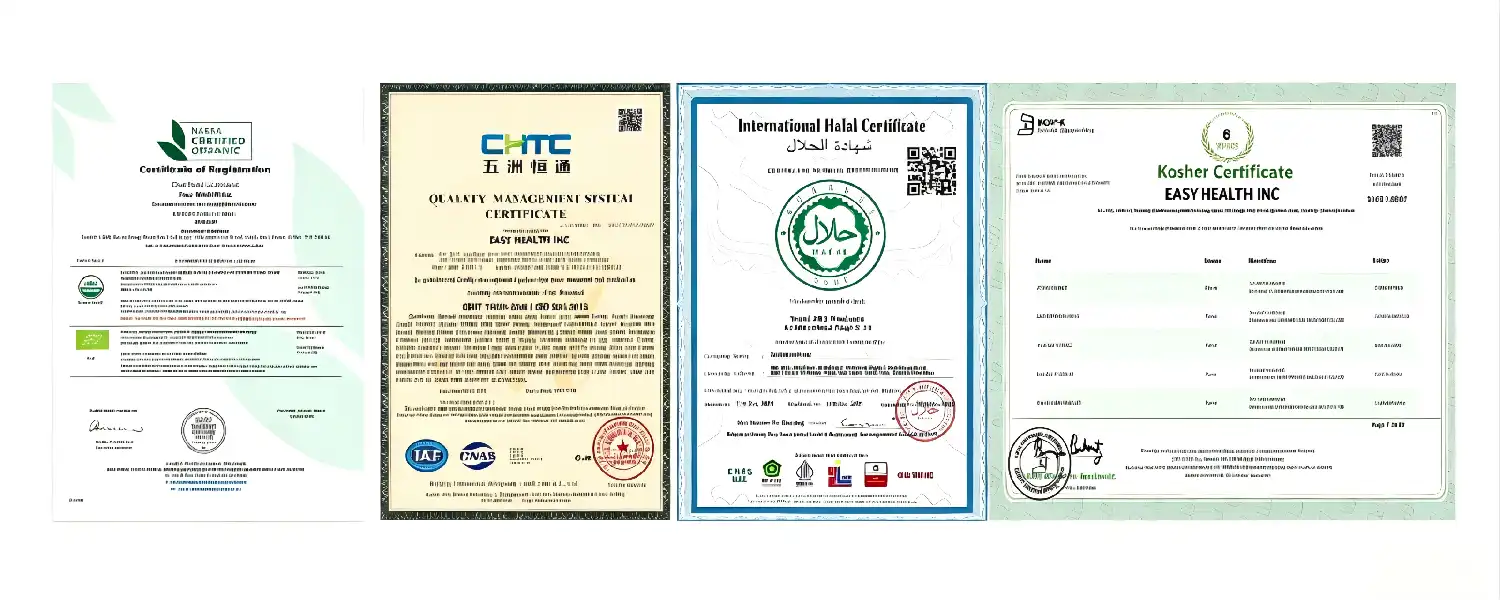
To choose a marigold lutein supplier, you need to see four types of paperwork: (1) batch HPLC CoA showing trans-lutein ≥82%; (2) full heavy metal panel (Pb ≤3 mg/kg, As ≤3 mg/kg, Cd ≤1 mg/kg, Hg ≤1 mg/kg); (3) microbiological results with Salmonella and E. coli as negative; and (4) FAMI-QS certification if the material is used to make feed. With these four rules, you can get rid of most of the fake or poor-quality goods on the market.
Pricing Drivers and Bulk Strategy
The spot price of Tagetes erecta flowers changes with the seasons in places where they are growing a lot, and so does the price of lutein from marigolds. People who talk about price-index-linked long-term contracts are less likely to be affected by price increases during harvest season than those who buy right away. With a MOQ of 25 kg, nitrogen-flushed packaging, and a shelf life of 12 months or more, you don't have to worry too much about running out of stock when you place your first qualification orders.
Regulatory Compliance for US Import
Marigold extract lutein is on the 21 CFR list, and the US market considers it to be usually safe (GRAS). If someone wants to meet the FDA import alert levels, they need to make sure that the right amounts of chemicals are left over and ask for a full pesticide residue panel (≤1.0 mg/kg). You still need to be recognised as both Halal and Kosher if you want to sell to people in the Middle East and Jews.
Quality Assurance and Purity Standards: What B2B Buyers Must Know
Industry Purity Benchmarks
Lutein content and stability affect poultry pigmentation product consistency, however test variance and Roche Yolk Colour Fan (RYCF) scores rely on feed composition, inclusion rate, bird characteristics, and feeding circumstances. Only use 82% trans-lutein if it fits the product grade and confirmed analytical technique. Buyers should verify the assay technique and acceptance criteria and seek independent third-party testing if necessary.
Buyers should check these quality metrics against the product specification before accepting batches:
- Use a validated lutein test to confirm content and isomer profile.
- Check lead, arsenic, cadmium, and mercury levels against limits.
- Microbiology: Check overall microbial numbers and pathogens for food or feed.
- When needed, verify solvent residues using an approved technique.
- Confirm that the batch fulfils the product's moisture limit for powder handling and storage stability.
Instead of applying to all marigold extracts, numerical restrictions should be defined based on product grade, intended application, and requirements.
Traceability and Certification Stack
With traceability and certification records, purchasers may check ingredient origin, production controls and product uniformity. The suppliers should retain batch-specific test results, related food or feed safety documents, and records of appropriate certifications. Microbiological findings Residual solvent levels Moisture content These should be recorded to the product specification and checked against the relevant acceptance criteria if applicable.
Audit Frequency Recommendations
Routine supplier audits and regular batch verification may assist ensure consistent product quality, check compliance with established requirements, and uncover changes in raw material sourcing or production methods. The frequency of audits should be dependent on the risk of the supplier, quality history and relevant customer or regulatory requirements.
Conclusion
Marigold extract lutein works the same way in eye health supplements, functional drinks, and chicken feed premixes as long as it is sourced, extracted, and checked correctly. The most important things to look for in a provider are trans-lutein that is at least 82% pure, microencapsulation security through pelleting, a full stack of certifications like FAMI-QS and Halal, and the ability to give full heavy metal and microbial data in a batch HPLC CoA. By following these rules, buyers protect the quality of their recipes, make sure they meet global regulatory standards, and create a supply chain that can't be broken by using a basic grade instead.
FAQ
What lutein dosage is recommended in eye health supplements?
Clinical studies supporting the AREDS2 formulation used 10 mg lutein and 2 mg zeaxanthin daily. Most commercial softgel products standardized from marigold extract target this dose range, using an oil suspension to support absorption of this lipid-soluble carotenoid.
How do I confirm that a supplier's labeled assay is accurate?
Request a batch-specific HPLC CoA and cross-reference it with an independent third-party lab test on the sample you receive. Any significant deviation between the two results—say, more than 0.5 percentage points—should prompt a supplier discussion before volume commitment.
Does microencapsulated lutein survive high-temperature feed pelleting?
Yes, when the encapsulation matrix is properly formulated with antioxidant protection. The powder should be tested at 85–90°C for the duration typical of pellet conditioning. Ask your supplier for stability data at these conditions, not just ambient storage data.
What certifications matter most for poultry feed applications?
FAMI-QS is the primary hard requirement for supplying major integrated feed groups. ISO 22000 and HACCP provide the food safety management foundation. Halal certification is critical for producers exporting animal products to Middle Eastern markets.
What is the standard shelf life for nitrogen-packed lutein powder?
With 25 kg nitrogen-flushed packaging stored below 25°C away from direct light, high-quality marigold lutein powder maintains its labeled assay for 12–24 months. Always confirm shelf life with the supplier's stability data, not assumptions.
Partner with Easy Health for Trusted Marigold Lutein Supply
The verified marigold extract lutein that Easy Health sells is FAMI-QS, Halal, Kosher, and has 82% trans-lutein. They've been making plant extracts for more than 11 years. You can get technical help from our team from the sample stage all the way through scale-up. This is true whether you need to find bulk ingredients, make an OEM premix, or create a custom CWS recipe for drinks. You can email devin@easyhealthbio.com or go to easyhealthinc.com to get in touch with our team and ask for a quote, sample kit, or COA.
References
1. Age-Related Eye Disease Study 2 Research Group. AREDS2 Report No. 3. JAMA Ophthalmology, 2013.
2. Bernstein, P.S., et al. "Lutein, zeaxanthin, and meso-zeaxanthin: The basic and clinical science underlying carotenoid-based nutritional interventions against ocular disease." Progress in Retinal and Eye Research, 2016.
3. Nolan, J.M., et al. "Macular carotenoids supplementation in subjects with atypical spatial profiles of macular pigment." Experimental Eye Research, 2012.
4. Kotake-Nara, E., & Nagao, A. "Absorption and metabolism of xanthophylls." Marine Drugs, 2011.
5. GBD 2019 Blindness and Vision Impairment Collaborators. "Causes of blindness and vision impairment in 2020 and trends over 30 years." The Lancet Global Health, 2021.
6. Rehman, A., et al. "Lutein supplementation in poultry: Effects on egg yolk pigmentation and oxidative stability." Poultry Science, 2020.


